


Episode 119 | Manulife All-in-One ETFs: active at the core, built to adapt
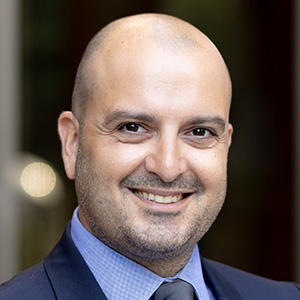
In recent years, as equity markets have delivered strong gains, some investors may have lost sight of why they need a more diversified portfolio. In this episode of Investments Unplugged, host Kevin Headland and guest Alex Richard, Senior Portfolio Manager, Multi-Asset Solutions, examine diversification and asset allocation through the lens of three new “All-in-One” ETF strategies: Manulife Conservative ETF Portfolio, Manulife Balanced ETF Portfolio, and Manulife Growth ETF Portfolio.
Take a listen to learn how these strategies may help position clients for long-term success.
Important Disclosure
Important Disclosure
This communication is not and under no circumstances is to be construed as an invitation to make an investment in the Manulife Real Asset Investment Fund (the “Fund”), nor does it constitute a public offering to sell the securities of the Fund. The offering of units of the Fund is made pursuant to its Confidential Offering Memorandum only to those “accredited investors” in certain jurisdictions of Canada who meet certain eligibility and cannot be sold in Canada to the general public. The offering memorandum contains important information regarding the fund’s investment objectives, strategies, restrictions, risks, fees, redemption limitations, liquidity and other matters of interest. There are no assurances that the stated investment objectives of the fund will be met. Applications for investment in the Fund will only be considered on the terms set out in the Confidential Offering Memorandum, a copy of which can be obtained from us. Eligible investors should review the Confidential Offering Memorandum carefully before deciding to purchase units and should note that alternative investments can involve significant risks. The Fund is not guaranteed, its values may change frequently and past performance may not be repeated.
The opinions expressed are those of Manulife Investment Management as of the date of this publication, and are subject to change based on market and other conditions. The information and/or analysis contained in this material have been compiled or arrived at from sources believed to be reliable but Manulife Investment Management does not make any representation as to their accuracy, correctness, usefulness or completeness and does not accept liability for any loss arising from the use hereof or the information and/or analysis contained herein. Manulife Investment Management disclaims any responsibility to update such information. Neither Manulife Investment Management or its affiliates, nor any of their directors, officers or employees shall assume any liability or responsibility for any direct or indirect loss or damage or any other consequence of any person acting or not acting in reliance on the information contained herein.
All overviews and commentary are intended to be general in nature and for current interest. While helpful, these overviews are no substitute for professional tax, investment or legal advice. Clients should seek professional advice for their particular situation. Neither Manulife, Manulife Investment Management Limited, Manulife Investment Management, nor any of their affiliates or representatives is providing tax, investment or legal advice. Past performance does not guarantee future results. This material was prepared solely for informational purposes, does not constitute an offer or an invitation by or on behalf of Manulife Investment Management to any person to buy or sell any security and is no indication of trading intent in any fund or account managed by Manulife Investment Management. No investment strategy or risk management technique can guarantee returns or eliminate risk in any market environment. Unless otherwise specified, all data is sourced from Manulife Investment Management.
Manulife, Manulife Investment Management, the Stylized M Design, and Manulife Investment Management & Stylized M Design are trademarks of The Manufacturers Life Insurance Company and are used by it, and by its affiliates under license.
5321419
Transcript
Transcript
Commentary is for general information purposes only. Clients should seek professional advice for their particular situation.
One of the interesting things about this product is we have broad toolkit in terms of what we can use. So we're not restricted to only using Manulife ETFs. We do have the ability to use third party ETFs
College football coach Paul Bear Bryant is famous for coming up with great motivational quotes, one of which translates well into investing. Offense sells tickets. Defense wins championships. Over the last few years, as equity markets have provided investors with gains over 20% per year, it's easy to forget about defense in a portfolio. The idea of diversification was put aside in favor of the chase for the highest returns. And while that may work in the near term. History is littered with periods and reminding investors why they need diversification for long term success.
More recently, we had market volatility from last April with tariffs. And of course, this March with the conflict in the Middle East. On today's episode of Investments Unplugged, we take a look at diversification by where three new, mainly all in one ETFs the mainland conservative ETF portfolio, manually balanced ETF portfolio, and mainland Growth ETF portfolio. These portfolios are not your and forget portfolios. The layers of diversification go beyond the split between equity and fixed income, but across regions, market capitalization, style and degrees of active Und. Manulife All-in-One ETFs activate the core built to adapt and TCR ready. Listen on this is Investments Unplugged.
Welcome back to Investments Unplugged. I'm your host, Kevin Headland, Investment strategist at Manulife Investment Management. And not with me today is my other co-host Macan. Unfortunately, he is sick, but the show must go on and I'm not alone. I'm here and joined by my friend and colleague Alex Richard, Senior Portfolio Manager of MAST Multi-Asset team, essentially one of those members that are in charge of making the allocation decisions for our asset portfolios across the platform, whether it's on retail or institutional or group retirement savings.
Alex, not your first time on the show, but it has been a long time, so welcome back. Thanks for having me. I'm excited to be here. We're excited to have you. It's a great kind of timing. We just recently launched what we call our all-in-one portfolios. Manulife All-in-One ETFs. And these are asset portfolios. But an ETF structure which is something new for Manulife.
And I think it's really exciting to be able to take the expertise we have with asphalt and bring it into a structure that is really a big focus for investors and advisors these days, especially with total cost reporting and CRM. Three on top of minds, I mentioned in our intro about the the increased interest, I would say, are the asset flow in all in one or asset allocation portfolio ETFs. So really happy to have you on the show.
First of all, let's talk kind of like top down. Let's talk start off with the mass team. Big team across many life and assets around the world. Could you talk a bit about your expertise in that sort of subject. Absolutely. So I'm part of this broader multi-asset solutions team. We have over 175 billion of assets globally. That's bigger than our fixed income and equity public market capabilities here at manually. So a very sizable team. We have over 50 different investment professionals that are part of that team spread throughout the world.
So we have folks in Toronto and Montreal, Boston, London, Hong Kong and Singapore. And I'm sure I'm forgetting some other geographies as well. But we have essentially boots on the ground and truly a global presence across the the world. In addition to that, we've been managing solutions since the mid 1990s, and then overseeing these all-in-one ETFs would be your Canadian allocation team headed up by Jamie Robertson. He's got over 40 years of investment experience and has been with our multi-asset solutions team since 2016.
For myself, I'm a portfolio manager on the Canadian Association team, overseeing close to 30 billion of assets on a day-to-day basis, and I've been with the firm since 2011. We're also supported by Misbah, who's a senior analyst who joined the team a few years ago and has been instrumental in developing these all-in-one ETFs. And as well, we're also leveraging some other capabilities within our mass team. So Jenny Kim, who's a portfolio manager and co-head of our systematic equity team here in Toronto, is also helping us with the implementation for these products. But beyond that, as well as part of this broader multi-asset solutions team, is our macroeconomic strategy team that helps us with a lot of the economic modeling.
And as well, we have a very large financial and quantitative engineering team that helps us develop these quantitative tools to deliver better solutions for our clients. When we're talking our three new portfolios all in one portfolio is we are looking at a conservative portfolio, a balanced portfolio and a growth portfolio. We have M cap, M bapand M gap. I believe they are the three tickers for the. So essentially multi Manulife can serve as allocation portfolio or asset or allocation portfolio that for letter acronym and the balance and the growth.
So that's how we know it. It's may leave conservative balance and growth and AP after that. So for those knowing when we look at those portfolios can we talk a bit about evolution. Like when you're when you're structuring ETF portfolios, it's probably a little bit different than you would do structuring apps. You know your typical association portfolios. So when you talk about the building of that, you talk about bit about how you came to building these portfolios.
Yeah. In some ways, yes. And then in some ways, no. So when we look across our broader franchise, the Foundation, how we go about constructing portfolios does have quite a bit overlap. So the starting point for us is our capital market assumptions. This is a very large exercise that we do on a quarterly basis, where the entire team globally comes together and we update our forecasts both in terms of expected risks, returns and correlations for over 100 different asset classes.
And on a quarterly basis, we go through this large exercise where we update our forecasts. And from there we build essentially the mixes for portfolios from an asset class perspective. So how much do we want in terms of equity versus fixed income. The regional breakdowns. And from there as well we can go more granular in terms of different asset classes or liquid alternatives such as things like global infrastructure as well.
We consider what goes into those mixes. So that exercise by and large, is the same across all of our portfolios. With that said, where there are some nuances that we have different building blocks. So part of the value that our team brings to the table is evaluating those underlying building blocks and determining what is the optimal mix in terms of those building blocks to achieve the outcomes that we're looking for from these ETFs.
Interesting here aspect is called this tagline kind of for these portfolios is active at the core, built to adapt and TCR ready, the active of the core. This is where it really is interesting because these are static set and forget it portfolios. This is not your your fathers or your parents as allocation portfolios that we used to be like, you know, the wrongful peel nighttime commercial set and forget it and keep it as static and asset mix so active is key there.
From as you said, the portfolio decision making process in terms of allocation, but also the underlying ETFs for the most are kind of the best of best, the manifest offer. And now we have some of our mutual funds that are very successful over time available in ETF structure. But also, as you mentioned, the equity and fixed income actively managed ETFs. So not only is the allocation active managed, but actually the underlying investments are also actively managed. So that is really, I think a little bit different from some of the other competitors out there.
Absolutely. The use of active management and there's different levels of active management. As you're highlighting from a building block perspective, we'd be using the best of what's available on the Manulife ETF platform. So these would be the life smart dividend ETFs, but also the multifactor ETFs that are sub advised by dimensional or or DFA.
Those were really the pioneers of factor investing. And we're excited to be able to use their solutions as well as part of these products. In addition, as well to the use of futures in these portfolios, which gives us an additional lever in terms of flexibility to make some of those association changes as well, which brings that additional layer of active management, whether it's updating those capital market assumptions on a quarterly basis or making changes outside of that in response to changing market conditions.
So, as you can imagine, between our forecast periods, you know, there's developments that may not be captured, things like the recent tensions in the Middle East or who knows. We'll see how, you know, the latest hantavirus develops and what that turns into potentially. So these are the type of things that we're monitoring between those forecast periods. Same thing as well coming into the year.
You know the markets were expecting earnings growth in the United States to come around in the low teens. And as latest reporting season, the earnings growth expectations for the US now are upwards of 30%. So these are the type of things that throughout forecast periods, we'd be kind of updating and making changes to our overall assumptions.
Know the earnings changes as well as the valuation during the season was and company was almost elevated. You want to be coming back then of course, you had a bit of pullback in in March and kind of allows you to be more flexible given the short term market movements, which of course is extremely important when you're when you're managing these portfolios.
you mentioned some of the components of some of the funds ETFs that you're able to invest in. But when you're making the capital markets assumptions, what if you really attracted to an asset class that makes doesn't really have the capabilities?
So is it only Manulife managed products that is available in these portfolios? One of the interesting things about this product is we have a broad toolkit in terms of what we can use. So we're not restricted to only using Manulife ETFs. We do have the ability to use third party ETFs and futures. And to your point, for certain asset classes where we don't have exposures on our platform and things like global listed infrastructure or things like a dedicated high yield or emerging market debt vehicle, these are the type of things that we're able to access through a third party ETF provider.
Same thing as well down the road. If we're looking to add to exposures to gold or those type of exposures, we'd be able to do that as well in these portfolios. That's great. Again, more about the flexibility aspect. You know, you have the act of the core, but the flexibility is the point, the built to adapt and be able to adapt to short areas and what's going on in the world.
looking outside, perhaps of the sandbox, shall we say, to still take advantage of opportunities even though we don't have those capabilities in-house? That's important aspect of these portfolios when we're talking about these portfolios, let's just talk about the composition or targets for manner could serve. ETF portfolio and Cap is a 6040 but 60% fixed income 40% equities. So when we say conservative I think those that might be thinking conserve are typically used to at 8020 rather than 6040. So more fixed income this has less.
The balance ETF portfolio is flipped on its head 6040 equity fixed income. And then the growth portfolio is 80% equity, 20% fixed. When you look at just those targets, what kind of flexibility do you have to tweak and go more equity or fixed income depending on those inputs? This is one of the key differentiating features for these ETFs is they're not managing to static mixes.
So that includes our ability to deviate from the equity and fixed income weights. But also in terms of the underlying asset classes as well. We do have flexibility to make changes, for example, to add to our international exposures from the US, but also access additional exposures that are not necessarily in our benchmark, which might be appropriate for the current environment that we're navigating, such as global infrastructure, which tends to do well in an environment where growth is under pressure and inflation is kind of remaining a little bit persistent and sticky. And throughout the first quarter, that was really a standout asset class in our in our portfolios, and not one you would necessarily find in these more kind of vanilla, low cost association ETFs that you would traditionally find out there.
I guess that's important because when you're looking at portfolios, one of the the key reasons that advisors and investors use asset allocation portfolios is not just swing for the fences growth, but more of a risk and just returns. We want to protect a bit of the downside protected volatility. And when you have some of the access to these, alternative type solutions to help when markets are correlated or when things are going by the night.
You can switch and move that to help some of the downside protection as The other thing I would highlight that is kind of unique to these portfolios is the level of diversification within these portfolios, depending on the risk profile that you're looking at, we access close to or upwards of 15 different asset classes, and that compares to only a handful of others for for some of the main competitors that we'd be managing against in that in that type of category.
And what that allows us to do is it gives us additional levers as active managers to seek out either additional sources of returns or perhaps play a little bit of defense depending on the market environment. But what it also does over time is it allows us to deliver much more consistent results and try to avoid some of those binary outcomes that folks are looking to avoid.
when you look at these portfolios and you talk about your inputs, can we talk a little bit about the current positioning of the portfolios? They're fairly new, but perhaps we can talk about positioning and where the team's views are for the current market environment.
Absolutely. So coming into the year, as we were looking at our capital market expectations, I think that really stood out to us was how compressed the range of outcomes was, not only within fixed income, but also within equities. So looking within the fixed income space, one of the things that really stood out is that the difference between the least and most risky asset classes, the range of returns, there was 150 basis points. So very narrow, not a lot of risk premium within that space.
So within that context, generally speaking, we tended to favor shorter duration fixed income assets over core bonds. So less interest rate risk if you will. And we generally favored as well global fixed income which had slightly higher yield than Canadian bonds. But and once again with less duration of risk as well within that profile looking at equities by and large similar story here within kind of the core asset classes that you'd be looking at in a portfolio, whether it's US, Canada or international large cap. The range of returns was rather narrow.
With that said, by and large, the more attractive returns tended to be outside of the US, and at the same time we did have certain asset class stand out to us. So global infrastructure is one that we've talked a lot about that really stood out in terms of not only providing a higher expected return than the other asset classes, but also providing some diversification and defensive characteristics at a time where global uncertainty was very much elevated, and increasingly so as we progress throughout the You said the the spread between the fixed income side, the spreads being extremely tight, spreads being trade.
There's there's wasn't much use of risk premium. It wasn't much you know opportunity to take on some risk. And we were talking about that coming into this year about the idea of looking at saying we want to be aware of the risks we're taking. We don't want to avoid risk necessarily, but take risks where we're actually compensated for taking that risk. And I think that's one area that's quite interesting.
I look at emerging markets debt and global debt and saying some would look at a market that and say, oh, it's risky. I don't know this country's. But when you have the capabilities that we have at Manulife and be able to understand the risk you're taking that that incremental income that you might not be as used to taking can actually offer you some, some great returns. And I think it's proven already this year that that asset class has done extremely well. And also being short duration, because we've seen yields kind of move higher during this uncertain environment. You would think actually long term yields where it should be coming down, especially in US treasuries. But it's been all replacing volatility on that
kind of more conservative aspect of fixed income has actually hurt. For those that are trying to be overly conserve, I would say in terms of on risk, on the equity side, you talk about being underweight us and of course, you know, people think it's only us the best place to be invested, but there is opportunities outside of us. You know, looking at Canada International, can you talk a bit about your views on the on the Canadian space and international versus the U.S.
right Yeah, absolutely. So when we think about our capital market expectations, what we do from that perspective, and this is part of the exercise that we do on on a quarterly basis, is we look back historically at what the drivers of returns are for those respected asset classes.
So depending on what we're looking at, those drivers will will differ in how we model and might change a little bit. But in essence, when it comes to equities, the drivers are the same. We're modeling what we expect in terms of growth. We model what we expect in terms of valuation changes, whether they get cheaper and more expensive. We model what the income or dividend yield of that asset class might be. And for Canadian investors is a very important component as well. What we expect from a currency perspective.
So bring all those together that informs what our expected returns for those various asset classes when it comes to to equities. So for the US, unsurprisingly, it has one of the highest and one of the superior growth rates that we would find across the world. But offsetting that are a handful of factors. So valuations is one of them. So even though earnings are growing at 30% year over year, we're still looking at multiples that are close to 21.
Time for earnings today. Historically you're looking at closer to 16 times multiple. So you would have to have another blockbuster year next year of 30% plus growth to get back to those historical averages. So from our perspective, when we think about US equities, we assume that over the next few years that those valuation multiples are probably going to compress. And that would be offsetting perhaps some of the higher growth rates that you'd find in the US.
Another factor that plays into favor of stocks outside of the US is the income differential. When you look at US stocks, by and large the dividend yield is pretty low. You're looking at probably 1.5%. And outside of the US you'd find typically dividend yields that are twice as high as that. And then lastly as well. And this is true for for the US relative to most currencies as well. We do factor in the US dollar to depreciate from current levels. There's a lot of reasons for that.
It's a it's a list that continues to expand. Part of that is twin deficit in the US. So from a trade perspective, the deficit continues to grow. From a fiscal standpoint, you're looking at fiscal deficits that are 6 to 7% of GDP at a time where the economy is doing superbly well. And God forbid, you get a bit of an economic slowdown that's only going to increase from here, notwithstanding the increase in defense spending, that's probably going to come up as well here over the next few years as they're looking to replenish some of their military assets.
And not only that, but there's a number of other factors as well, in terms of capital flows that are likely to rotate the US. And it's just not as good of a safe haven as it used to be. So a lot of reasons to be bearish on the US dollar. So as you're thinking about your opportunity set with inequities, I think it makes sense to be a little bit more weight outside of the US for a number of those factors, including currency valuations and better yields abroad.
So we're talking about all of this opportunity said and constructed the portfolios. How often would these portfolios would be rebalance the static rebalancing? Or is it just as Singh's change constant monitoring the aspect? That's a good question. There's several layers to it. So as I've alluded to, the core process where we update our capital market assumptions is a key one. Granted, we're not updating our portfolios after every quarterly process.
We'll see if there's any material change to our that at that point, we might decide to run updated optimizations where we'd run thousands of and tens of thousands of simulations to determine what is that best optimal policy mix. And then throughout those periods or in between those periods as we'd be monitoring the markets on a day to day basis and making adjustments for things that weren't necessarily captured during that process as well.
Things that are a little bit harder to say quantify. So we leverage what we call our MFC process. Essentially, it speaks to our team monitoring the macroeconomic conditions, how fundamental factors are evolving throughout the forecast And then for slightly more timely factors, we'd be looking at sentiment and technicals as well to when and where we should be kind of making some of those shifts in the portfolios. But it is to that we are monitoring these portfolios on a day to day basis and looking at some of our other portfolios.
I think that's a very valuable aspects for visors as well. In highly uncertain markets where we see a lot of volatility, our team is monitoring these portfolios and making sure that they're rebalanced back to their to their targets. That's really poor as well, right. You don't want to get skewed too far away from the overall targets, because people investing for an expected range of outcomes profile allocation. So it's great to let winners run sometimes, but make sure that they don't run too far. You want to bring them back to the optimal exposure.
Now also within the portfolio, as you said, there's there's upwards of 15 different asset classes or different products and that are available in the portfolio. Why would you say remove one or even go and add one? Is there is there a criteria to to remove exposure a certain class or product that represents that asset Yeah, absolutely. So from our perspective, when we think about asset classes, we're always thinking in terms of what does it contribute to the portfolio from a risk return or characteristic perspective.
So having a bigger menu of options available to us allows us to deliver a much more consistent profile throughout time. So, for example, to give you an idea of what some of those levers would be, as you look, for example, on the more aggressive portfolios, you'll find that we have the ability in addition to allocate to things like global infrastructure, we also have the ability to allocate across different market caps.
So you'll find exposures to Canadian US and international small caps. You'll find exposures to emerging market equities but also within fixed income. What you'll find is a range of exposures that we can allocate to. So within Canadian fixed income for example we have access to core Canadian bonds. But we also have access to short term bonds.
In the event that we want to reduce duration in the portfolio, we also have access to corporate bonds as well. If we're looking to get a little bit more credit profile. And that's in addition to the core global bond exposures that we get through strategic income and bond, but as well through some of those more esoteric asset classes, such as high yield and emerging market debt, that really bring this unique risk and return profile to the I think it's a great time to to wrap this up. within those profile allocations, the products you're investing in, the different ETFs that may have to offer are also active managers as well. So you're getting active management within the active overlay strategy.
So when we talk about active the core it really is truly active. Talk about the flexibility and built to adapt constant daily overview of the portfolios to make sure you're not out of touch with what's going on and not just ignoring the the environment just to focus on the allocation of the portfolios, making sure that they always are at the same. 60, 40, 60, 48, 20 levels. So that's important.
And lastly, of course TCR ready. And this is where it's quite interesting to say when we look at the three portfolios, when we're looking at the main life conservative ETF portfolio or M cap MCP, it's actually low risk measured from a perspective perspective management fee is at 35 basis points. The manually balanced ETF portfolio, which is low to medium risk, is also 35 basis points. Mbappe, Mbappe and lastly, the growth ETF portfolio and gap MGP also at 35 basis points. And here's where I think it's very surprising. Low to medium risk as well. So the idea is we're adding equities to the overall portfolio or Xposure without sacrificing the risk tolerance which is important as well because we don't want to just chase growth for the sake of chasing growth. We want to make sure that it is a risk adjusted returns that we're seeking for these portfolios.
So I think we're really excited for this. The other exciting factor, I think not only are we having these available in ETF structure, but we're actually be launching in mutual fund structures as well. For those who don't have the ability to buy or invest in ETFs, they can get access to these portfolios coming soon through the mutual fund structure as well. So that is another way. So definitely look out for those.
Alex, I want to really thank you for taking your time here. Thanks for coming back on the show. We won't. We'll make sure that you're not a stranger, that you're back more often because I think this is a really great, interesting aspect to talk about. Not only is portfolios, but also the team's views. And now we are taking advantage of these views to make better decisions for clients and their portfolio.
So thanks very much for joining us, So as we're going to end the show today, for those listeners who want to get more information on these portfolios, please reach out to your management, vestments, wholesaler and wholesaling team, and they'll be able to walk you through some more detailed information or help you look at taking advantage of the opportunities that exist within these three portfolios and eventually within the mutual fund structure as well.
So thanks very much for listening. If you enjoyed this podcast, please rate us and helps like minded listeners find us even easier. And if you do also enjoy it, please make sure mention to friends and family or other colleagues that are wants to listen to it. We actually have been just passing 100,000 downloads since we started this, so I think it's a pretty successful podcast and I really enjoy doing these podcasts usually again with my colleague Macan, he apologizes for not being here. He's under the weather, but we want to make sure we get this podcast out within timely of this new launch for this Manulife portfolio. So well again, thanks for joining us and for Investment Unplugged. I'm Kevin Headland and we'll talk to you soon. Take care.
Trans
This podcast is provided as a general source of information and should not be considered personal, legal, accounting, tax or investment advice or construed as an endorsement or recommendation of any entity or security discussed. Investors should seek the advice of professionals prior to implementing any changes to their investment. Certain statements in this podcast are forward looking that are predictive in nature, depend upon or refer to future events or conditions. Forward looking statements are subject to risks, uncertainties and assumptions that could cause actual results to differ materially from those set forth.
Although the forward looking statements contained herein are based upon what MIM and a portfolio manager believe to be reasonable assumptions, neither MIM nor the portfolio manager can assure that actual results will be consistent with these forward looking statements. Certain statements contained in this podcast are based in whole or in part, on information provided by third parties and members, taking reasonable steps to ensure their accuracy. Market conditions may change, which means that the information contained in this podcast. Commissions, trading commissions, major fees and expenses all may be associated with mutual fund investments.
Please read the prospectus before investing. The indicated rates return are the historical annual compounded annual returns, net of fees and expenses payable by the fund, including changes in security value and reinvestment of all dividends or distributions, and do not take into account sales, redemption, distribution or optional charges or income taxes payable by any security holder that would have reduced returns. Mutual funds are not guaranteed their values change frequently and past performance may not be repeated. Commentaries for general information purposes only. Clients should seek professional advice for their particular situation.
Commissions, management fees and expenses all may be associated with exchange traded funds (ETFs). Please read the ETF Facts and prospectus before investing. ETFs are not guaranteed, their values change frequently, and past performance may not be repeated.